Eau de parfum vs eau de toilette: what's the difference?
Parfum, eau de parfum, eau de toilette, eau de cologne — what the labels mean, how long each lasts, and which one to choose.
16 October 2026 · 4 min read
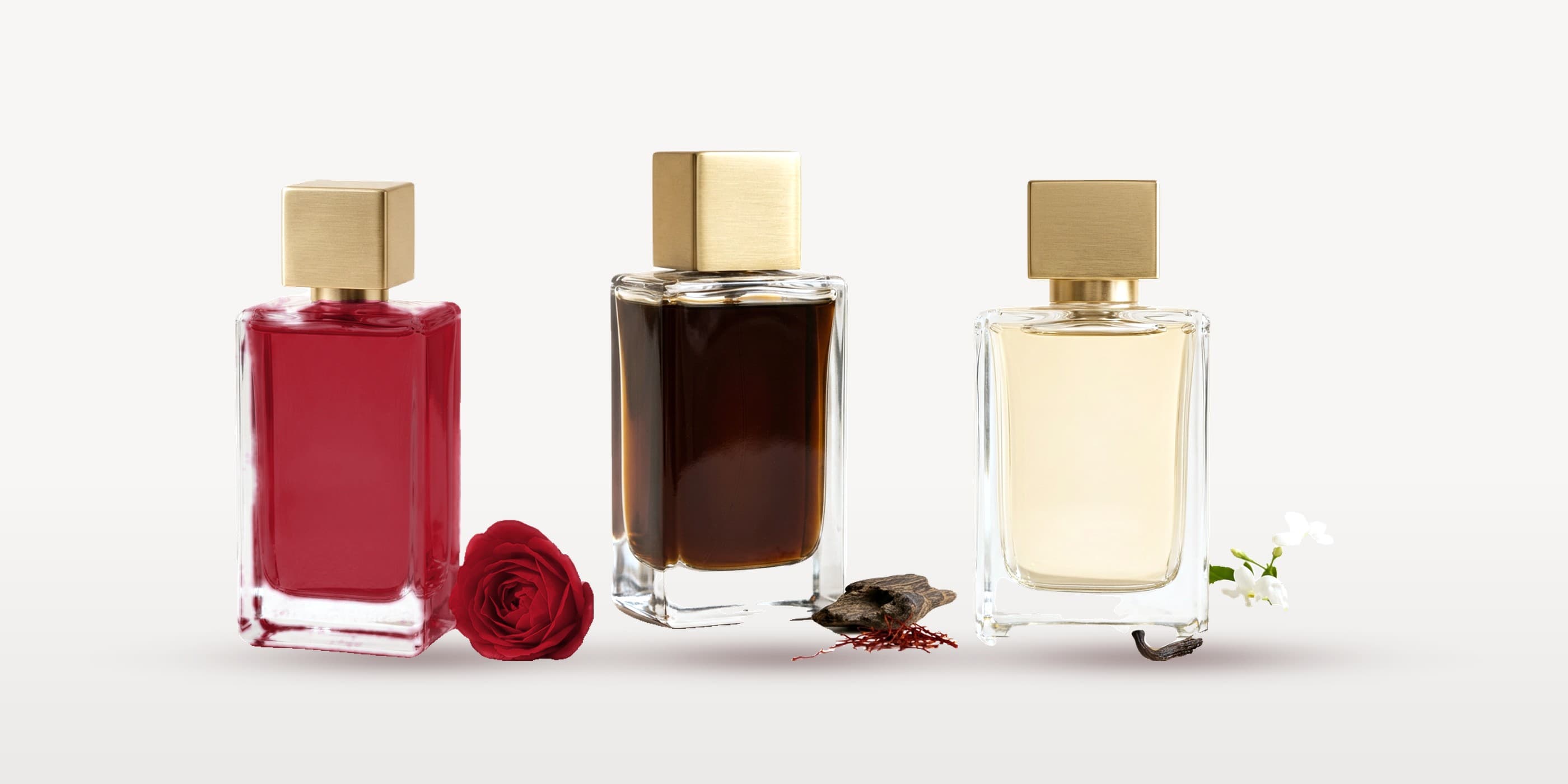
The words on a perfume bottle tell you how concentrated the fragrance is — how much perfume oil is mixed with alcohol and water. More oil generally means a stronger scent that lasts longer, and usually a higher price per ml.
The main concentrations
Exact percentages vary from brand to brand, but these are the typical ranges:
- Parfum (or extrait): roughly 20–30% fragrance oil. The richest and longest-lasting.
- Eau de parfum (EDP): roughly 15–20%. Strong, long-lasting, ideal for everyday wear.
- Eau de toilette (EDT): roughly 5–15%. Lighter and fresher, fades sooner.
- Eau de cologne (EDC): roughly 2–5%. A quick, light splash.
Which lasts longer?
An eau de parfum will usually last noticeably longer than an eau de toilette of the same scent. How long any perfume lasts on you also depends on your skin, the weather and the notes — warm woods and vanilla linger longer than citrus.
Which should you choose?
For daily wear in a warm climate, an eau de parfum is the practical choice: fewer sprays, fewer top-ups. An eau de toilette suits people who prefer a very light, close scent.
Every Emorah fragrance is an eau de parfum, offered in 6 ml and 10 ml so you can choose how much to commit to.
Find your Emorah.
Shop Emorah eau de parfum